Colin Bowlin, 28, had been rolling dice on Sutphin Blvd. near 113th Ave. about 4 a.m. yesterday, when an argument broke out over money, said a police source.
Bowlin left the game and was walking away when he was shot once in the lower back, police said.
His cousin, who was with him at the time, loaded him into a car and rushed him to North Shore University Hospital in Rego Park, where he died a short time later, said police.
"The guy fired and hit him in the back," said Bowlin's brother, Mark, 33, calling the shooter a coward.
"If he was such a brave guy, why not fight him? If he was man enough to pull the trigger, he's man enough to take responsibility for it," he said, urging the shooter to surrender.
Bowlin, who lived in Hollis, joined the NYPD in 2005, when he was 22 years old and worked in the 101st Precinct in Far Rockaway, his brother said.
Bowlin resigned from the NYPD in 2008, said police.
He had been working as a security guard for an armored courier service, family said.
Police yesterday were still hunting for the shooter.Clare Trapasso
Pages
Search Gun Site
Disclaimer: The statements and articles listed here, and any opinions, are those of the writers alone, and neither are opinions of nor reflect the views of this Blog. Aggregated content created by others is the sole responsibility of the writers and its accuracy and completeness are not endorsed or guaranteed. This goes for all those links, too: Blogs have no control over the information you access via such links, does not endorse that information, cannot guarantee the accuracy of the information provided or any analysis based thereon, and shall not be responsible for it or for the consequences of your use of that information.
Sunday, 31 July 2011
former NYPD officer was killed - shot in the back - after a dispute over a curbside dice game in Jamaica, Queens.
Tuesday, 26 July 2011
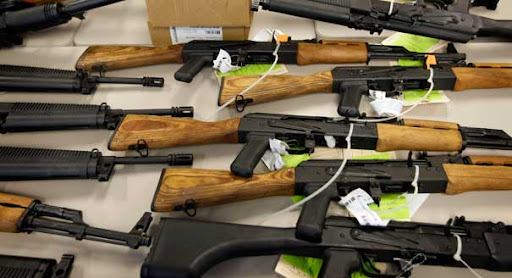
“Fast and Furious” put guns in the hands of some of Mexico’s most notorious drug gangs.
Representatives of the Bureau for Alcohol Tobacco and Firearms admitted that mistakes had been made in the operation, but officials at the Government Oversight and Reform Committee hearing tried to defend the operation as a well-intentioned effort gone wrong.
ATF representatives said they knew that guns — according to one estimate just over 1,000 firearms — were going to Mexico and ending up in the hands of criminals there, but that was the point: The ATF was attempting to trace the guns through criminal networks in order to track gun- and drug-trafficking routes.
“The goal of the operation was to disrupt, dismantle, and destroy drug cartels purposely, knowingly allowing the guns to go to Mexico,” said William Newell, the former special agent in charge for the ATF Phoenix field division.
Newell said in prepared testimony that the purpose of the operation was to get beyond the straw purchasers on the street and to make arrests up the chain of command in criminal organizations, but lawmakers criticized the operation as misconceived from the start.
Under questioning from Peter Welch (D-Vt.), Newell said that ATF agents would sell guns to buyers involved in criminal networks and would then follow those individuals and place them under surveillance.
“So a load of assault rifles has been delivered to a middleman. Was there a plan by which you would follow where those guns went?” Welch asked.
Newell said that agents would continue surveillance of the individuals but that because of resource constraints, agents would be called away to other cases and surveillance would cease, seemingly leaving the buyer to travel freely with the guns he had purchased from government agents.
Newell said that, in hindsight, the operation should have included greater risk-assessment in order to gauge progress and to check where the guns involved had turned up.
It is unclear to what extent senior officials at ATF knew about the operation, but agents said Tuesday that they had passed information about the operation up the chain of command. William McMahon, the ATF deputy assistant director, said that he had informed his superiors about the operation, but when pressed during questioning he said he was unaware of some details.
Tuesday’s hearing came on the heels of a report released by the oversight committee that found U.S. officials in Mexico City had known about the operation and had tried to have it stopped but were rebuffed by their superiors.
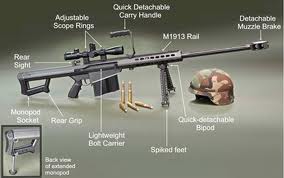
Mexican federal police in four helicopters attacked a drug cartel in a mountain redoubt. They were rebuffed by heavy fire, including from a massive .50 caliber rifle.
A bullet hole left in one helicopter's plate glass window is one exhibit in an exhaustive House Committee on Oversight and Government Reform report released Tuesday showing the breadth of a high-stakes, unprecedented, and, ultimately, ill-advised US scheme called "Operation Fast and Furious."
The .50 caliber bullet hole, the report says, likely came from a gun trafficked via Fast and Furious, an operation to allow nearly 2,000 arms to leave US gunshops via certain traffickers who the US government had identified and thought it could track. The idea was to trace these "straw buyers" to key cartel figures in an attempt to score major gun busts to prove the US was serious about stopping arms trafficking across the border.
Instead, the report alleges that the operation – which one US official has called "a perfect storm of idiocy" – likely allowed hundreds of powerful guns to cross into Mexico, possibly changing the outcome of cartel battles with Mexican police, leading to the deaths of many Mexicans and one federal agent, Border Patrol Agent Brian Terry, and damaging diplomatic relations between the US and Mexico.
The Fast and Furious scandal is still playing out, with hearings in the House Oversight Committee Tuesday. Chairman Rep. Darrell Issa (R) of California says he is intent on finding out how high in the Obama administration knowledge of the operation went.
The report, "Fueling Cartel Violence," backs reports that leaders in the federal Bureau of Alcohol, Tobacco, Firearms, and Explosives (ATF) were aware of the operation. But it also names several key Department of Justice officials, such as Assistant Attorney General Lanny Breuer, as "clearly" being aware of the operation – a charge that the Obama administration denies.
According to whistleblowers and key witnesses, however, the real lesson behind Fast and Furious, a two-year operation that ended in January 2011, is how "groupthink" clouded decision-making at the highest levels of government, causing an agency to go against its basic instincts – which is to not allow arms to be trafficked illegally – and consequently contribute, not detract, from border violence.
"These guns weren't going for a positive cause, they were going for a negative cause," ATF attaché Carlos Canino told the congressional oversight committee. "The ATF armed the [Sinaloa] cartel. It's disgusting."
Despite repeated pushback from some agents and the attaché office in Mexico City, ATF Acting Director Kenneth Melson assessed it as "a good operation," the report says. According to witnesses, Assistant Attorney General Breuer appeared to cite Fast and Furious in meetings with Mexican officials, saying the US had a major gun-interdiction effort underway out of Phoenix, the report adds.
Where the guns went
The plan was to trace the guns through straw buyers to major cartels, to then build cases and make arrests. But early on, it became evident that tracking the guns had become a problem and that hundreds had made their way across the border and disappeared into cartel gun caches. According to the report, Fast and Furious guns made their way to three prominent Mexican cartels: Sinaloa, El Teo and La Familia.
ATF Chief Says He Didn't Approve Tactics
The acting head of the Bureau of Alcohol, Tobacco, Firearms and Explosives told congressional investigators he didn't approve the tactics of a federal operation that lost track of firearms purchased by suspected smugglers.
The testimony by acting ATF chief Kenneth Melson and other top officials, released Tuesday, rebutted suspicions voiced by Republican lawmakers that the tactics used in the ATF's Operation Fast and Furious received high-level approval.
But testimony by lower-level officials at a House hearing Tuesday pointed to mismanagement and lack of oversight in letting Fast and Furious move forward in 2009 and 2010. In some cases, senior officials appear not to have asked questions once signs of trouble emerged.
The operation was aimed at catching top smugglers who funnel weapons from the U.S. to drug-cartel gangs in Mexico. To do so, ATF agents let some gun purchases by suspected smugglers go forward.
GOP lawmakers argue the ATF should have known it couldn't keep track of those firearms. They released a report Monday saying that more than 1,000 of the weapons haven't been recovered or traced.
Democrats on the House Oversight and Government Reform Committee released their own report Tuesday with excerpts from interviews with Mr. Melson, his deputy, William Hoover, and others.
"I don't believe that I knew or that Billy Hoover knew ... that the strategy in the case was to watch people buy the guns and not interdict them at some point," the Democratic report quotes Mr. Melson as saying in a July 4 interview.
The interview with Mr. Melson was conducted without Justice Department lawyers present. The acting ATF chief has split with his bosses after reports in The Wall Street Journal and elsewhere that Justice officials wanted to oust him from his post.
According to the report, a congressional interviewer asked Mr. Melson: "Did anyone at the Department of Justice ever tell you or tell anyone else at headquarters and it got to you that those tactics were authorized as part of a new strategy in order to follow the guns, let the guns go, see where they might end up?"
Mr. Melson answered: "No."
However, Lorren Leadmon, an ATF intelligence agent, testified at Tuesday's House hearing that Mr. Melson and other senior officials received briefings in late 2009 and 2010 indicating trouble with the Fast and Furious operation.
Mr. Leadmon said he and others provided details at these briefings of weapons seizures in the U.S. and Mexico tied to Fast and Furious. In addition to the ATF leaders, an official from the criminal division at Justice Department headquarters received the briefings, Mr. Leadmon said.
Also at the hearing, Darren Gil, the ATF's attache in Mexico City during the operation, compared the Fast and Furious missteps to the ATF's performance in its 1993 raid of a religious sect in Waco, Texas, where a gunbattle left four ATF agents dead.
He said the operation exposed how "poor management, poor judgment and poor leadership resulted in disaster. Operation Fast and Furious, as I have come to understand it, is indeed a disaster."
Another ATF official, William McMahon, who led regional field operations, apologized at Tuesday's hearing for apparently not reading some of the documents that he approved, including wiretaps connected to the operation.
Rep. Darrell Issa, the California Republican who is chairman of the House oversight committee, and Republican Sen. Chuck Grassley of Iowa have led the congressional probe of the operation.
The hearing Tuesday led by Mr. Issa offered an unusual scene, as active ATF agents chastised their bosses, sitting a few seats away, for letting the operation continue.
William Newell, the chief of the ATF Phoenix office during the Fast and Furious operation, defended the way the operation was conceived, saying "it was not the purpose of the investigation to permit the transportation of firearms into Mexico, and to the best of my knowledge none of the suspects in this case was ever witnessed by our agents crossing the border with firearms."
Mr. Hoover told the congressional investigators that he raised concerns and asked in March 2010 that the operation be shut down. It wasn't ended until December 2010, after a border patrol agent was killed in a shootout in Arizona. An assault rifle found at the scene was traced back to a suspect in the Fast and Furious operation.
Mr. Issa scolded Mr. Newell and others who he said were being evasive. He said it remains his goal to have Mr. Newell or his bosses at the ATF and the Justice Department admit that "you knowingly let guns walk."
Tracy Schmaler, a Justice spokeswoman, said the House committee's report didn't include details and testimony that "makes clear that operational details relating to this investigation were unknown to senior Department of Justice officials." She noted that the department's inspector general is investigating the matter.
122 weapons recovered at crime scenes in Mexico have been linked to a US government weapons sting operation
At least 122 weapons recovered at crime scenes in Mexico have been linked to a US government weapons sting operation gone awry, two US members of Congress said in a report Tuesday.
Operation "Fast and Furious," run by the US Bureau of Alcohol Tobacco and Firearms (ATF), allowed some 2,000 weapons -- including .50 caliber sniper rifles -- to be sent into Mexico between 2009 and 2010 in an attempt to track gun smuggling routes. Of those, some 1,400 remain unaccounted for.
"So far, the Justice Department has provided documents that reference at least 48 separate recoveries involving 122 weapons" connected to the operation, read the report, issued by two Republican legislators, Representative Darrell Issa and Senator Charles Grassley.
Two of the weapons were found at the scene of the killing of Brian Terry, a US Border Patrol agent shot and killed in Arizona on December 14 while trying to arrest armed men preying on illegal immigrants.
The Mexican government of President Felipe Calderon has loudly complained about the program. Mexico estimates that 90 percent of the weapons seized from drug traffickers come from its neighbor to the north.
"The faulty design of 'Operation Fast and Furious' led to tragic consequences. Countless United States and Mexican citizens suffered as a result," read the report.
Several ATF agents reportedly opposed the operation, which has since been canceled.
Issa has said the program was approved at the highest levels of the US government, and has directly blamed acting ATF director Kenneth Melson and other members of the agency's leadership.
President Barack Obama in March said that neither he nor Attorney General Eric Holder authorized the program, and that the Justice Department is investigating the case.
In a Tuesday hearing on Capitol Hill, Issa -- chairman of the House Oversight and Government Reform Committee -- complained of what he described as "the administration's effort to impede this investigation," which "slows our work down."
Members of the US public "have a right to know, once and for all, who did authorize it and who knew about it," he said.
"These guns went to ruthless criminals," said Carlos Canino, the ATF acting attache to Mexico. "It infuriates me that people -- including my law enforcement, diplomatic and military colleagues -- may be killed or injured with these weapons."
"I believe what happened here was inexcusable -- and we in Mexico had no part in it," said Canino.
Jose Wall, an ATF special agent posted in the far northwestern Mexican border city of Tijuana, said he fears the guns "will continue to exact a terrible toll long after these hearings are over."
More than 41,000 people have been killed in Mexico's drug wars since president Calderon launched a crackdown in late 2006.
The leading Democrat on the committee, Elijah Cummings, said the ATF leadership took 10 months to close the program after problems first surfaced in March 2010.
But he also called on reforming US gun laws that allow weapons to be easily sold in border states and smuggled into Mexico.
Separately, the McClatchy-Tribune news service reported Tuesday that, according to diplomatic cables, US embassy officials in Mexico City had not been informed about the ATF sting program.
2 held in shooting of girl in have prior arrests
Court records show the two men being held in the shooting of an 11-year-old girl in San Francisco have a history of arrests for alleged property crime.
Nineteen-year-old Lazarus Thomas of Daly City and 20-year-old Caprice Shadon Mitchell are accused in the shooting late Friday night in the city's Western Addition neighborhood that left Linda Ngo with a life-threatening wound. Police say the men were in an argument when one of them pulled a weapon and opened fire.
A stray bullet went through a nearby apartment and hit Ngo in the chest.
Thomas and Mitchell have been booked on suspicion of assault, shooting into an inhabited dwelling and brandishing a firearm.
The San Francisco Chronicle reports that Thomas was sentenced last week for a second-degree burglary conviction. Mitchell has been arrested before on suspicion of burglary, but not convicted.
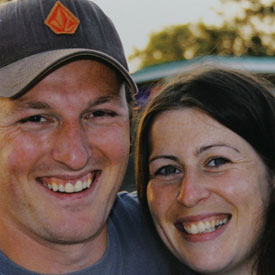
Ben and Catherine Mullany were shot in the head on the last day of their honeymoon at a luxury resort on the Caribbean island of Antigua in 2008.
Qualified doctor Mrs Mullany, 31, died instantly, while her 31-year-old physiotherapy student husband was flown back to Swansea on a life support machine. He died a week after the shooting.
Final stages of trial
Kaniel Martin, 23, and Avie Howell, 20, deny shooting the Welsh couple. They also deny murdering 43-year-old local shopkeeper Woneta Anderson.
The two-month long trial, which has seen more than 90 witnesses give evidence, is now in its final stages.
If a verdict is reached tomorrow it will be three years to the day after Mr and Mrs Mullany were killed.
Mr Mullany's parents Cynlais and Marilyn have visited the Caribbean island and have heard evidence in court on what would have been their son's third wedding anniversary.
Last week, they were joined by their daughter-in-law's mother and father, David and Rachel Bowen.
DNA evidence
The prosecution has based its case on DNA evidence and ballistics.
Director of Public Prosecutions Antony Armstrong said both defendants had gunshot residue on their clothing.
A bandana with Howell's DNA was found at the scene of shopkeeper Woneta Anderson's murder, while Mr Mullany's stolen Nokia mobile phone was later discovered at Martin's home.
Both defendants declined the option to testify at their trial.
Claims of 'fixed' evidence
However, Howell and Martin's defence team described the evidence against their clients as being "circumstantial".
Yesterday, Martin's barrister Marcus Foster went so far as to claim British detectives had "fixed" evidence in order to solve the murder of former police officer Mr Mullany and his wife.
Mr Foster said: "They came on a mission... when one of their own was taken. Not just a countryman, but an ex-soldier and police officer."
Tonch Weldon, 39, was charged with fatally shooting Amy Gephart in front of his wife
An Iowa County jury convicted a rural Blairstown man of first-degree murder Tuesday in the fatal 2009 shooting of a woman who was involved in a relationship with the man and his wife.
Tonch Weldon, 39, was charged with fatally shooting Amy Gephart in front of his wife, Amanda, after she threatened to leave him for Gephart. Tonch Weldon then shot himself.
The jury deliberated the case for almost five days following a weeklong trial that wrapped up July 20.
Weldon was emotional during the trial and cried at times but was nearly emotionless as the verdict was read and as deputies walked him back to jail, The Gazette reported.
Weldon faces a mandatory sentence of life in prison without parole. Sentencing was set for Aug. 15 in Iowa County District Court in Marengo.
During the trial, Amanda Weldon testified her husband shot Gephart on June 7, 2009, after she threatened to leave him. She said the couple had an open marriage and Gephart lived with them and was their sexual partner until she fell in love with Gephart. The women decided to leave Weldon and after arguing that day, Amada Weldon testified her husband shot Gephart and then turned the gun on himself.
Prosecutors argued the shooting was deliberate and premeditated. The defense claimed the shooting was a "crime of passion."
"Amy was our only child and we had 35 wonderful years with her," her parents, Jim and Nancy Gephart, said in a statement after the verdict.
Murder charges have been filed against three people in the shooting death of a San Diego police officer
Murder charges have been filed against three people in the shooting death of a San Diego police officer, Dist. Atty. Bonnie Dumanis announced Tuesday.
Alex Charfauros, 26, Melissa Ortiz, 21, and Patrick Luangrath, 19, are charged in the death of Officer Chris Wilson, 50, a 17-year veteran of the police department.
Wilson was fatally shot on Oct. 27, 2010 as police attempted to storm an apartment in the Paradise Hills neighborhood in search of a possible probation violator.
The three are set to be arraigned Tuesday in San Diego County Superior Court. Each faces a variety of charges, including murder, attempted murder, conspiracy to obstruct justice and gun-related violations, Dumanis said.
"Officer Wilson's death shook the community and reminded us all about the daily dangers faced by law enforcement in San Diego," Dumanis said.
Two people were found dead inside the apartment, including the person believed to have fired the fatal shot at Wilson. Three others were arrested at the apartment.
Norway killer insane
The lawyer of a Norwegian who killed at least 76 people in a bombing and a shooting spree said on Tuesday his client appeared to be a madman. “This whole case indicated that he is insane,” Geir Lippestad said of Anders Behring Breivik, who has confessed to “atrocious but necessary”
actions, but denies he is a criminal.
The lawyer said it was too early to say if Breivik would plead insanity at his trial, expected to be a year away.
Lippestad said Breivik had stated he belonged to an anti-Islam network that has two cells in Norway and more abroad. Norwegian police and researchers have cast doubt on whether such an organisation exists.
Police believe Breivik probably acted alone in staging his bloody assaults, which have united Norwegians in revulsion.
Justice Minister Knut Storberget hailed “fantastic” police work after the attacks, deflecting criticisms that police had reacted too slowly to the shooting massacre. “It is very important that we have an open and critical approach...but there is a time for everything,” Storberget told reporters after talks with Oslo’s police chief.
An armed SWAT team took more than an hour to reach Utoeya island, where Breivik was coolly shooting terrified youngsters at a ruling Labour Party youth camp. He killed 68 there and eight in an earlier bombing of Oslo’s government district.
Storberget also denied police had ignored threats posed by right-wing zealots in Norway. “I reject suggestions that we have not had the far-right under the microscope,” he said.
Many Norwegians seem to agree the police do not deserve opprobrium for their response. At a march of more than 100,000 in Oslo on Monday night, people applauded rescue workers.
UK group admits links with killer
After initial denial, the far-right English Defence League (EDL) has admitted that Norwegian mass killer Anders Behring Breivik had links to the group.
Breivik reportedly met leaders of the EDL in March last year when he came to London for the visit of Geert Wilders, the Dutch right-wing politician.
Daryl Hobson, who organises EDL demonstrations, said Breivik had met members of the group.
Hobson said in an online posting: “He had about 150 EDL on his list ... barring one or two doubt the rest of us ever met him, altho [sic] he did come over for one of our demo [sic] in 2010 ... but what he did was wrong. RIP to all who died as a result of his actions.”
Scotland Yard was investigating Breivik’s claims that he began his deadly “crusade” after being recruited to a secret society in London, and that he was guided by an English “mentor.”
Prime Minister David Cameron said Breivik's claims were being taken “extremely seriously.”